
Robert Greene's 48 Laws, 25 Years Later
A review of some of Robert Greene's 48 laws, and whether they still have relevance today.
I remember first reading Robert Greene’s 48 Laws of Power (abebooks | bol.com) in my early 20s. In fact, I even recall when I first discovered the book. It reads differently now.
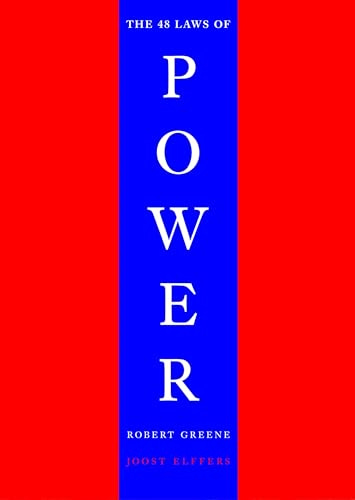
As was my habit, sometime in 1998 or 1999, I was reading a book on the human condition in a dark coffeeshop in Costa Mesa, California, and exuding strong ‘leave-me-the-fuck-alone-I’m-reading’ vibes. While lost in whatever topic it was — human sexuality, power dynamics, the male mind, idk — a tall Indian guy rocked up to my table, ignored my resting bitch face demeanor and flashed a charismatic smile.
We started chatting, and mused over what I was reading at the time, as well as a bit of philosophy, economics, and physics, to boot. Before he went on his way, he asked for my number, and recommended I give Greene’s 48 Laws a read.1 I obliged, adding it to the growing pile of books I was already pouring over in what became a five-year quest to unlock the whole ‘how to be a successful human’ thing.
While I did learn many things from Greene’s brilliant distillation of some of the great historians, philosophers, military strategists, and seducers of the past, I can’t say I really appreciated the book at that point in my life. On first read, I was skeptical — many of these laws seemed so cumbersome, others contradictory. How do you Play the Perfect Courtier (Law 24) while simultaneously Crush[ing] Your Enemy Totally (Law 15)? How does one Think as You Like, But Behave Like Others (Law 38) while Cultivating an Air of Unpredictability (Law 17)? None of this made sense!
More importantly, the 48 Laws painted a very bleak picture of humanity. Surely most people weren’t this naive. Surely, we didn’t need to be evil, selfish, scheming bastards to be influential, powerful, or memorable? I knew the whole life is ‘nasty, brutish, and short’ business, but hadn’t we evolved just a bit since?
In short, I wasn’t able to appreciate Greene’s laws, because at 20, I wasn’t good at nuance. I didn’t understand the fractal complexity of systems, and that lots of people, are, to be blunt, fucking idiots. This was a few years before I would leave California, head to law school, and deal with the murky gray of life.
Over the next two decades, I travelled, dated wildly inappropriate men, met hundreds of amazing, inspiring people, took on soul-destroying work, took on deeply meaningful work, moved house a half dozen times, met a good man and fell in love, moved house a few more times, move countries, and inadvertently acquired a cat menagerie.
Life Changes Perspective Changes Life
A few weeks ago, my husband and I decided to move to the Netherlands,2 and I coincidentally decided to pull out and re-read my very dog-eared copy of 48 Laws. It’s part of a larger plan I have to complete the middle-aged dad challenge: 1) have a mid-life crisis ✅; 2) get annoyingly into history ✅; and 3) repeatedly complain about aching body parts, and ‘kids these days’ ✅.
I recognize that I am not, in fact, a middle-aged dad. Just go with it.
This time, I also decided to take some notes, and see whether any of the 48 laws still made sense in a world where so much of the day-to-day feels like a chaotic, indescribable mess.
The first thing I realized was that Greene’s laws were less literal laws, and more maxims and sage advice. Ideas that should be applied liberally when the need suits, not rigid rules to obey. And like many social constructs, the laws are vague enough that they allow the reader to interpret them according to need and circumstance.
I think I’m finally at a point where I can appreciate and properly evaluate the laws as maxims, without treating them as absolutes. Where I can see the fractal complexity of dealing with humans means following these laws dogmatically would be wildly ineffective. I mean, unless you’re an absolute sociopath, I don’t know how anyone could follow more than say, 15 of these rules concurrently as part of normal course.
Second, I realized that so much of this book is based on the wisdom of a 17th century Spanish Jesuit priest and philosopher Baltasar Gracián, and in particular, his work The Art of Worldly Wisdom. So, I know what’s next on my reading list.
My Attempt to Understand the 48 Laws In the AI Age
An important thing to understand is that Robert Greene’s 48 Laws were first published in 1998. The internet was still shiny and new then, and Google and Amazon were just launching as companies. They had not yet morphed into the surveillance capitalist vultures they are today.
More importantly, in 1998, we still spent most of our lives offline, rather than on. When the 48 Laws came out, social media didn’t exist. Law 6 — Courting Attention at All Cost — wasn’t as effortless (or unintentional) as it frequently is today. Likewise, the ability to Re-Create Yourself (Law 25) was actually doable in the days before everything was memorialized on the internet forever, and every part of our lives was trackable by Flock and Amazon Ring cameras like it’s 1984.
It would be nearly two decades before the idea of applying Law 32 — Play to People’s Fantasies — would become something that anyone with access to ChatGPT and Nano Banana could do in minutes. Greene never had to conceptualize a world where memes or deepfakes existed, or where mis- and disinformation were actively toppling governments.
But there are many laws that still hold, and in fact are being expertly exploited by broligarchs, politicians, influencers, and grifters today. And that means many of Greene’s historical maxims are still very much worth discussing.
This is what I want to dig into. This is what I’ve been taking pages of notes on, puzzling over, and trying to apply to our complex world. See, I think most of Greene’s laws still resonate — and much of what feels like a reaction to a categorical societal shift is simply just a reaction to uncertainty. In so many ways, history while not repeating, is rhyming really, really hard.
So, I’m going to try to put forth a few brief pieces exploring some of the laws that stand out as being highly relevant — particularly when it comes to technology, hype cycles, and the people and systems who are trying to extract as much from all of us as possible before crawling into their bunkers to avoid the 21st Century version of the French Revolution.
If nothing else, I’ll be trying to apply Law 28 — Enter Action with Boldness — bringing a voice to what others may be feeling but can’t — or won’t articulate.
A parting quote, from Arthur Schopenhauer:
You should know that foolish people are a hundredfold more averse to meeting the wise than the wise are indisposed for the company of the foolish.
Leroy, Unpacked

Thanks, Rohit!
Technically, our planned move has been in the works for months, but we finally did the whole moving thing in mid-November. Seven cats from Ireland to the Netherlands is … something.
The 48 Laws is a wild read. I treat it more as a set of observations on human behavior rather than a rulebook. Many people do act in ways the book describes, so reading it can provide some perspective on their behavior and what might be driving it.